

How to Use a Signature Extractor from Picture: The Complete Guide
If you have ever tried to sign a PDF, insert your signature into a Word document, or add your John Hancock to an email footer, you already know the pain. You either print the document, sign it by hand, scan it again, and hope the quality is good enough, or you awkwardly try to crop a photo of your signature and end up with a background full of shadows, paper texture, and stray pen marks. This is precisely the problem a signature extractor from picture is designed to solve.
That is exactly why so many people, freelancers, business owners, and students are now searching for a reliable signature extractor from picture to pull a clean signature out of a photo or scanned document and turn it into something they can actually use online.
In this article, we will walk through what this kind of tool actually is, how it works, why it has become so popular, and how you can get the best results when using one. By the end, you will understand exactly why this small but powerful tool has become essential for remote work, digital paperwork, and everyday productivity.
What Is a Signature Extractor From Picture?
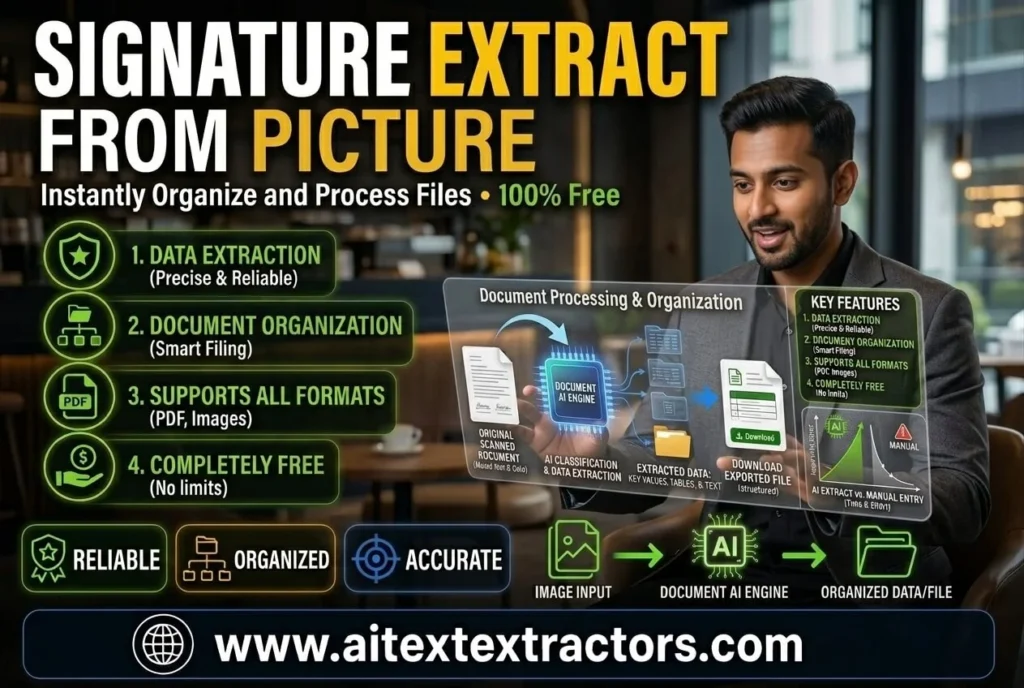
At its core, a signature extractor from picture is a tool usually powered by image processing or AI, that takes a photo of your handwritten signature (on paper, a sticky note, or even a whiteboard) and isolates just the signature itself. It removes the background, cleans up noise, and often converts the image into a transparent PNG file so the signature can be placed on top of any document without a white box or shadow around it. Try AI Text Extractors signature extractor tool it is easy to use and 100% free.
Think of it like a background remover, but specifically trained and optimized for the thin, curvy lines of handwriting. A generic photo background remover might struggle with the fine strokes of a signature, but a dedicated tool built for this purpose handles exactly that kind of detail.
Why People Are Searching for a Signature Extractor from Picture
There are a few clear reasons this tool has become so widely used:
- Remote work and digital contracts with more people working from home, printing and scanning documents just to sign them is inefficient. A signature extractor from picture lets you skip the printer entirely.
- Freelancing and invoicing Freelancers often need to add a signature to invoices, proposals, or agreements. Instead of signing every single document by hand, they extract their signature once and reuse it digitally.
- Students and academic paperwork from permission slips to official forms, students frequently need a clean digital signature for submission.
- Small business owners Business owners who send quotes, contracts, or authorization letters benefit hugely from having a ready-to-use signature image.
- Email signatures and branding Many professionals like to include a personal, handwritten-style signature in their email sign-off for a more human touch.
In every one of these situations, a signature extractor from picture saves time and avoids the hassle of physical paperwork.
How Does a Signature Extractor From Picture Actually Work?
Most tools follow a similar general process, even if the underlying technology differs slightly between apps or websites.
Step 1: Uploading the Image
You start by taking a photo of your signature on a plain sheet of paper or you scan it using a scanner or scanning app. The better the lighting and contrast the better the final result will be. This is the raw input the tool will work with.
Step 2: Detecting the Signature
The tool then analyzes the image to detect where the ink strokes are located. Advanced tools use edge detection and contrast analysis to separate dark pen or ink marks from the lighter paper background. This is the core function of any signature extractor from picture, and it is where the real magic happens.
Step 3: Removing the Background
Once the signature is detected, the background (usually white or off-white paper) is removed entirely, leaving only the signature strokes. This step is what turns a plain photo into a professional, usable digital asset.
Step 4: Cleaning and Enhancing
Many tools also include a cleanup stage that removes small dust particles, shadows, or smudges picked up during scanning or photographing. Some platforms even let you adjust the thickness, sharpness, or color of the final signature before you export it.
Step 5: Exporting as a Transparent File
Finally, the cleaned signature is exported, typically as a PNG file with a transparent background, so it can be layered onto any document, PDF, or image without visual interference.
Key Features to Look for in a Signature Extractor From Picture
Not all tools are work equally. When choosing one, keep an eye out for the following:
- Transparent background export (PNG support) This is non-negotiable if you want to place the signature onto documents cleanly.
- High-resolution output A blurry or pixelated signature looks unprofessional so resolution quality matters.
- Noise and shadow removal Good tools automatically clean up imperfections from the original photo.
- Fast processing Nobody wants to wait minutes for a simple image conversion.
- Privacy and security Since a signature is sensitive personal data choose a tool that does not store your images indefinitely or misuse your data.
Free or affordable pricing Many reliable tools offer free extraction especially for personal or occasional use.
No software installation required Browser-based tools are generally more convenient than downloading dedicated software.
Best Practices for Getting a Clean Result
Even the best signature extractor from picture cannot fix a badly taken photo. Here are some tips to get the cleanest possible extraction:
- Use plain white or light colored paper.
- Patterned or lined paper can confuse the detection algorithm.
- Sign with dark ink. Black or dark blue ink offers the strongest contrast against the paper.
- Avoid shadows. Take the photo in even natural lighting rather than under a single harsh lamp that casts shadows across the page.
- Keep the camera steady. A blurry photo will produce a blurry signature, no matter how good the software is.
- Sign larger than usual. A bigger signature gives the tool more detail to work with, which often results in a cleaner final image.
- Crop close to the signature before uploading, if the tool allows it, to help the algorithm focus only on the relevant area.
Following these small steps before you even open the tool can dramatically improve your results and save you from having to redo the whole process a second time.
Common Use Cases in Everyday Life
It worth highlighting just how many everyday tasks benefit from this simple tool:
- Signing rental agreements or lease documents digitally
- Adding a handwritten-style signature to a resume or cover letter
- Approving internal company memos electronically
- Creating a personalized digital autograph for fan mail or merchandise
- Filling out government or school forms that require a signature
- Adding authenticity to certificates or diplomas created digitally
In each of these examples using this kind of tool eliminates the need to print sign and re-scan a document saving both time and paper.
Signature Extractor From Picture vs. Manual Editing
Some people try to achieve the same result manually using basic photo editing software like Paint or even advanced tools like Photoshop. While this is technically possible it usually takes far more time and skill than most people are willing to invest. A dedicated signature extractor from picture automates the entire background removal and cleanup process in seconds something that could take twenty or thirty minutes to do manually with mixed results.
For anyone without design experience a purpose-built tool of this kind is simply the more practical, efficient, and consistent choice and it removes almost all of the guesswork involved in manual editing.
Frequently Overlooked Details That Improve Results
A few smaller details often get overlooked but can make a noticeable difference in the final output. For instance, the type of pen you use matters more than most people realize. Gel pens and fine-tip markers tend to produce crisper more consistent lines than ballpoint pens, which can sometimes skip or fade in places. Similarly the angle at which you photograph your signature matters. Holding the camera directly above the page, rather than at a tilted angle, prevents distortion and keeps the proportions of your signature accurate.
Another detail worth considering is file format. While PNG is the standard export format because it supports transparency, some platforms also allow SVG export, which is a vector format that can be resized infinitely without losing quality. If you plan to use your signature across many different document sizes, from small forms to large certificates, a vector option can be especially useful.
Finally, consider keeping a backup copy of your original photo before processing it. If the first extraction does not turn out as clean as you like, you can always try again with different settings rather than having to sign and photograph the document from scratch.
Summary
A signature extractor from picture might seem like a small, simple tool, but it solves a real and surprisingly common problem. Whether you are a freelancer sending out your tenth invoice this month, a student submitting a signed form online, or a small business owner trying to modernize your paperwork, having a clean, ready-to-use digital signature saves time and adds a professional touch to everything you send.
Instead of repeatedly printing, signing, and scanning documents, a good signature extractor from picture lets you sign once, extract it cleanly, and reuse that same signature across countless documents in the future. As remote work and digital paperwork continue to grow, tools like this are only going to become more essential, not less.
If you have not tried one yet, it’s worth spending five minutes with a signature extractor from picture the next time you need to sign something digitally. Once you experience how much smoother the process becomes, you probably won’t go back to printing and scanning again